Or should I say Mega Blog? It seems more accurate. Over 1,000 views and 40 posts later, this is the culmination of a great first year of blogging. A mega year, if you will. This semester, I covered a wide range of topics, but they all connected to each other in one way or another. As I previously mentioned in my first Meta Blog, I write about my life because that is what I know. I also write about the world the rotates so quickly beneath our feet. Regardless of the topic, Blogging allows a writer to create their own Author's Style.
I did not discuss as many current events as I had in previous quarters, and I did not talk about me, me, me. But being the angsty teen I am, SOMETHING has to be about me. This quarter, my writing style has been reinforced and I am happy with it.
Everything written is also read (diaries excluded) and so when writing one must always keep in mind the reader. By making my writing clear and empathetic, I feel I did this. One must also keep their audience engaged. With the help of a small poll on the side of my blog, I was able to tune into what my audience was looking for. Integrating pictures and jokes where they were appropriate helped me retain readership. This empathy for the reader has helped me form the style of writing I enjoy most; that is casual and personal. Even the most mechanical of events has a human side, and I will continue to strive and improve even more on uncovering it. I hope you agree.
Please refer to the post I feel has the most unique writing style and that I am most proud of: Lists.
Wednesday, June 1, 2011

Friday, May 20, 2011
Lists
Lists: we make them, we break them, we talk about them in AIS. Today Mr. Bolos asked why we all list the things we do: pack a suitcase, travel the world, learn a new language. Let's answer why with some possible explanations (In no particular order)...
- They are bored. Example: Stuff White People Like. This list is wonderful; very funny; totally pointless.
- They are forgetful. Example: Grocery lists. "Eggs, milk, bread, and hmmm... what else? I'll check my grocery list and find out! Oh, that's right- paper towels! So glad I didn't forget" (List-Writing Grocery Shopper).
- They are ambitious, or want to be. Example: The Bucket List. For those who want to travel the world and skydive before they "kick the bucket."
- They seek fulfillment. Example: Personal lists that are say, under your bed in a red binder. (Who would do that...pshhh) This list includes showing kindness, giving hugs, and the like.
Tuesday, May 17, 2011
What do you get when you mix Citizen Kane, Brainy Quote, and a teen icon? A blog post!
To Start: I was amazed when I learned that Orson Welles directed, produced, wrote, and starred in Citizen Kane- one of the most critically acclaimed films in American history. I agree with critics when they praise the film; I very much enjoyed it and the discussions it prompted in class. Some would call a twenty-something year old a genius for creating a masterpiece the likes few can compete with. I did some research on this genius, Orson Welles. I found facts and some fun stuff, too.
The Movie:
George Orson Welles lost his mother at the age of eight, his father at the age of thirteen. He created his own empire as an actor, producer, writer, and director (Biography HERE). Although Citizen Kane is supposedly based on the life of William Randolph Hearst, I see noticable comparisons to Welles' life. Reading more makes me believe any connection between Welles' own life and Kane's are merely coincidence, as Charlie Foster Kane seems strikingly similar to Mr. Hearst. They both come from money from mines, they both were expelled from fine universities, and they both ran a newspaper called "The Examiner." This seems like more than a coincidence.
Quotes:
If you ever get the chance, look up some of Orson Welles' quotes. I think they can add "comedian" to his list of titles and accomplishments. He's As said by the Genius:
-Ask not what you can do for your country. Ask what's for lunch.
Fun Stuff:
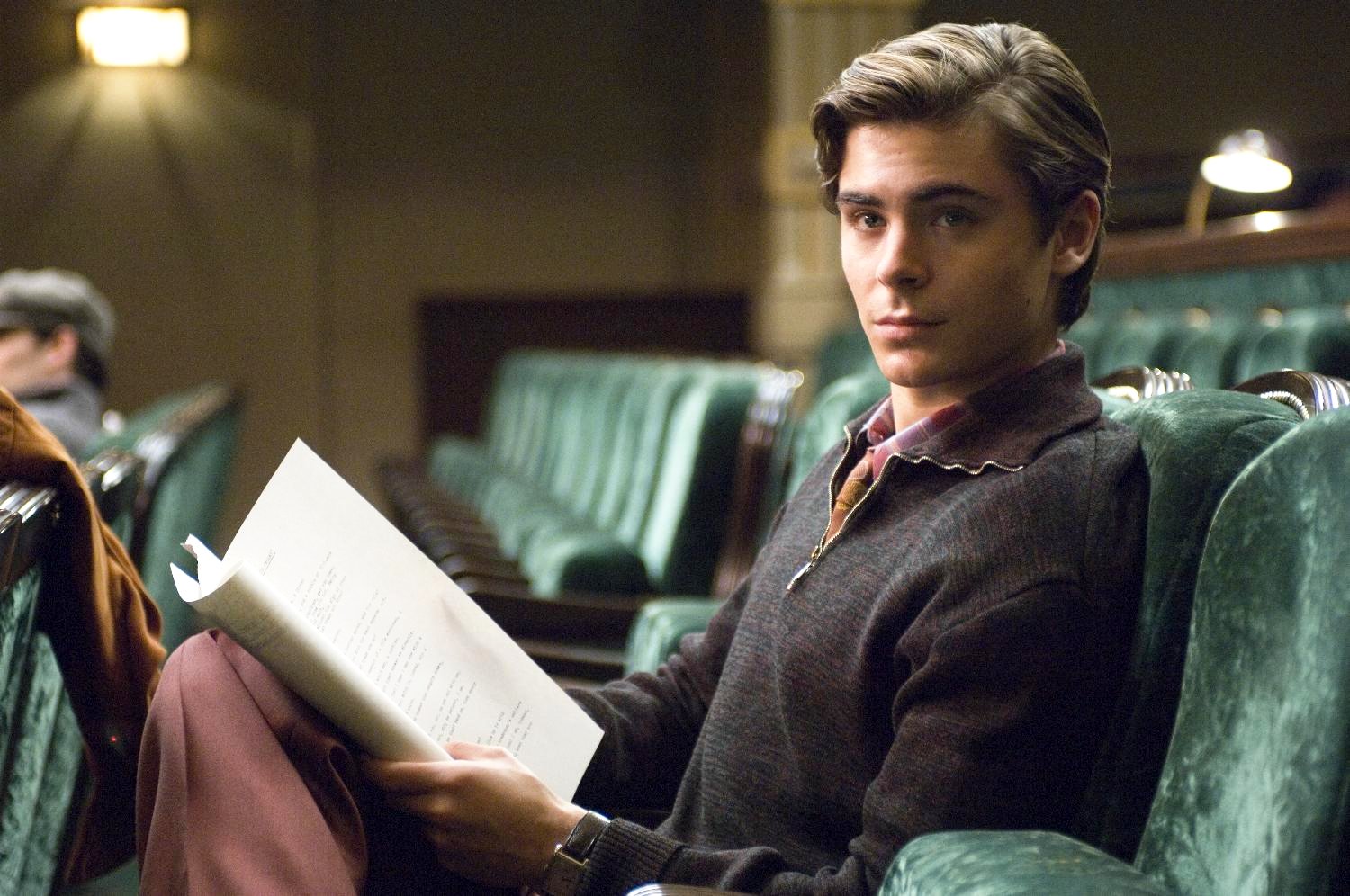 |
| I just had to put a picture in (you're welcome). |
As a stereotypical teenage girl would react, I was SO happy to find a connection to Zac Efron (My husband, by the way. He'll find out sooner or later). Me and Orson Welles is "based on Robert Kaplow's young adult novel of the same name, the story blends fictional characters with real ones" (TIME Magazine). I haven't seen it, but am confident it is a quality movie, maybe not the likes of Citizen Kane, but surely pleasing to the eye. Okay I'm done with that now, thanks for bearing with me!
George Orson Welles lost his mother at the age of eight, his father at the age of thirteen. He created his own empire as an actor, producer, writer, and director (Biography HERE). Although Citizen Kane is supposedly based on the life of William Randolph Hearst, I see noticable comparisons to Welles' life. Reading more makes me believe any connection between Welles' own life and Kane's are merely coincidence, as Charlie Foster Kane seems strikingly similar to Mr. Hearst. They both come from money from mines, they both were expelled from fine universities, and they both ran a newspaper called "The Examiner." This seems like more than a coincidence.
Quotes:
If you ever get the chance, look up some of Orson Welles' quotes. I think they can add "comedian" to his list of titles and accomplishments. He's As said by the Genius:
-Ask not what you can do for your country. Ask what's for lunch.
Tuesday, May 10, 2011
Homework: More than Just Worksheets
Duke University's Harris Cooper says that ten minutes of homework per grade level (first grade, 10 minutes; tenth grade 100 minutes) is effective in solidifying lessons learned during the day and instilling good work habits. (ARTICLE HERE) Is that true? I wouldn't know, because this methodology implies I would be in 18th grade, which I am certainly not.
I found that the homework debate encompasses much more than worksheets and assigned readings: it encompasses, too, predisposition to success. Socio-economics play a part in homework's effectiveness. The "home" part of "homework" plays an important role in the educational process, says CBS News (ARTICLE HERE):
These findings hold true even across the pond. UK's The Guardian reports (ARTICLE HERE) that the more middle class a school is, the higher their test scores. Even though this refers to more than just homework, it references the involvement of most middle-class parents in the school system. Whether at home or at school, a student's work is influenced by their family.
So, I ask you, is homework effective? I argue that it is often given overzealously and gives an arguably unfair advantage to middle and upper class students. What do you think? All opinions are welcome; thanks for reading.
I cannot vouch for this claim, but Dr. Cooper can. Time Magazine (ARTICLE HERE) analyzes his findings:
Kids who do some homework in middle and high school score somewhat better on standardized tests, but doing more than 60 to 90 min. a night in middle school and more than 2 hr. in high school is associated with, gulp, lower scores.Test scores refer to standardized test scores, not necessarily the Spanish quiz Tuesday or math test next Thursday. The ACT asks of our religious background, whether or not we like building bird houses, for example, but not about how much time per night we spend on homework. Is that fair? Well, maybe the general background information is enough.
I found that the homework debate encompasses much more than worksheets and assigned readings: it encompasses, too, predisposition to success. Socio-economics play a part in homework's effectiveness. The "home" part of "homework" plays an important role in the educational process, says CBS News (ARTICLE HERE):
Homework, as its name implies, is usually done in the home. That is where differences in class, education, and family structure are starkest. As Richard Rothstein details in "Class and Schools," those differences are not slight: Disadvantaged parents are less likely to help their children and, when they do, their help is likely to be less valuable.This argument says that parent's helpfulness is reflected by their CLASS SYSTEM (ding ding ding!), but I would like to extend this to the entire family. I turn to my siblings for homework help far more often than I do my parents. Will, my brother and NT senior, helps me with math and science since he took the same classes only a year ago. If my brother were in a gang, or working all the time to help pay bills, then I would not have the advantage of his help. The validity of this point can be proven if we all think about the environment we work in at home. Although I cannot say everyone in our class has a safe and supportive environment to work in, it is easy to say that most of us do.
These findings hold true even across the pond. UK's The Guardian reports (ARTICLE HERE) that the more middle class a school is, the higher their test scores. Even though this refers to more than just homework, it references the involvement of most middle-class parents in the school system. Whether at home or at school, a student's work is influenced by their family.
So, I ask you, is homework effective? I argue that it is often given overzealously and gives an arguably unfair advantage to middle and upper class students. What do you think? All opinions are welcome; thanks for reading.
Monday, May 2, 2011
Osama Bin Laden is Dead: Fuel for Prejudice

Yesterday, a shocking announcement instilled joy, patriotism, fear, and confusion into the hearts and minds of Americans. Barack Obama addressed the nation with the following words (click HERE for full transcript and video):
"The United States is not –- and never will be -– at war with Islam. I’ve made clear, just as President Bush did shortly after 9/11, that our war is not against Islam. Bin Laden was not a Muslim leader; he was a mass murderer of Muslims. Indeed, al Qaeda has slaughtered scores of Muslims in many countries, including our own. So his demise should be welcomed by all who believe in peace and human dignity."
I would like to draw attention to "Bin Laden was not a Muslim leader" and say THANKS to President Obama for spelling this out for those who do not already know it. It seems that most prejudice against Muslim people, and all middle eastern people for that fact, is rooted in misconceptions of terrorism. The post 9/11 world is no easy place to live for any one who identifies as Muslim or looks middle eastern. Whenever fear is involved, people turn nasty. 9/11 scared people- it hurt them- and human nature tells us that someone needed to take the blame. This seems terrible to me. WHY WHY WHY do people use hate to combat hate?! A simple math problem (I know, I know, sorry to make you do math) proves that this "method" of resilience is not only ineffective, but counter productive:
Hate + Hate = More Hate
The death of Osama Bin Laden provides fuel for people to act cruelly towards their fellow Americans, and human beings. Stereotypes, prejudices, ignorance, and cruelty are all too common; we can and we must stop them. Please take a minute and read these articles (linked) that show the impact of discriminating against "terrorists," "radical jihadists," and adherents of Islam (because "Islam is the Devil").
So, again, I want to thank President Obama for recognizing a very important distinction; hopefully people who stereotype and judge will recognize their failings and correct them. Only then can we come closer to peace.
Tuesday, April 26, 2011
Stay Classy!
Reading The Great Gatsby has prompted discussion about social class. I did a little research about America's perceptions of social class and reflected on my own. Here are my findings:
Is there truly a cycle of rich to richer, poor to poorer? I don't believe so. Although certain advantages come from having money, preventative measures between being financially unstable to financially stable can, and have been, overcome. To give extreme examples, I turn to Forbe's "Rags to Riches Billionaires," which states that "almost two-thirds of the world's 946 billionaires made their fortunes from scratch." Not relying on a cycle of wealth, government leniency, or inheritance, these people created their own wealth.
Money does NOT necessarily match wealth. Wealth in terms of family, in terms of experience, in terms of friendship, and in terms of insight do not depend on a pay check. If a financially poor, happy, confident, and intelligent person tried to make friends with a person similar in all aspects aside from salary, would they be able to form a relationship? I would hope so, and do believe so. It's called social class after all; we're not talking about socio-economic class. That's a different ballgame.
I consider myself upper class because of my education environment, physical and emotional safety and security, and because of my strong friendships. My financial situation may or may not match my mindset of class, and honestly, that doesn't really matter much.
Any input on how you define "Social Class" is much appreciated.
I came across an interesting report by the New York Times (click HERE to see it). Ms. Goulart, of the self-proclaimed lower class, said "The rich get more benefits and tax breaks and the poor people don’t," directly relating to self-proclaimed upper class woman, Ms. Freeborn. She says that rich people get "preferential treatment, where they don’t have to pay for things."
So social class is based on money, people can move among classes, and it is based on perspective. However, the question remains, what is it? I conclude that it is a mindset; an idea. If you take another look at the photos of the NY Times interviewees, their facial expressions become proportionately happier with the amount of money they have. The people in between are "transitions" from one emotion/social class to the next.
 |
| Rich n' Happy. |
 |
| Poor n' Not. |
I consider myself upper class because of my education environment, physical and emotional safety and security, and because of my strong friendships. My financial situation may or may not match my mindset of class, and honestly, that doesn't really matter much.
Any input on how you define "Social Class" is much appreciated.
Friday, April 22, 2011
Winding Down: Junior Theme #(I forget what number this is...)
Hello fellow Junior Themers! Hope all research and writing is going well!
As we review our final drafts of this lengthy project, it seems appropriate to reflect on the journey on which we have just ventured. At the beginning of this process, "Junior Theme" seemed like an all-encompassing project of doom. Thousands of potential articles- a vast population of potential interviews- hours in front of a computer screen lied (laid?) ahead.
Personally, the interviews proved challenging. All were set up to be email interviews, as hundreds of miles separated us. The three experts I approached agreed to do an interview. The first try, I received a response within hours, sent questions, and received answers before the end of the night. My next try seemed successful. I approached, she replied, I questioned, and... nothing. No response to the questions. I moved on. Take three! I approached, he responded, I questioned, and... nothing. However, this third try was not totally in vain. In his initial response, Mr. Scott Robertson offered over a page of insight to my Why question. Even though I did not hear back regarding my questions, his words proved quite effective in my paper.
I also want to take this opportunity to thank our teachers for their help above and beyond the typical teacher. Ms. Gressel, Mr. Bolos, Ms. O'Connor, and Ms. Eich, made Junior Theme manageable and even enjoyable. Thanks you, everyone!

As we review our final drafts of this lengthy project, it seems appropriate to reflect on the journey on which we have just ventured. At the beginning of this process, "Junior Theme" seemed like an all-encompassing project of doom. Thousands of potential articles- a vast population of potential interviews- hours in front of a computer screen lied (laid?) ahead.
Personally, the interviews proved challenging. All were set up to be email interviews, as hundreds of miles separated us. The three experts I approached agreed to do an interview. The first try, I received a response within hours, sent questions, and received answers before the end of the night. My next try seemed successful. I approached, she replied, I questioned, and... nothing. No response to the questions. I moved on. Take three! I approached, he responded, I questioned, and... nothing. However, this third try was not totally in vain. In his initial response, Mr. Scott Robertson offered over a page of insight to my Why question. Even though I did not hear back regarding my questions, his words proved quite effective in my paper.
I also want to take this opportunity to thank our teachers for their help above and beyond the typical teacher. Ms. Gressel, Mr. Bolos, Ms. O'Connor, and Ms. Eich, made Junior Theme manageable and even enjoyable. Thanks you, everyone!

Subscribe to:
Posts (Atom)